From Today's Washington Post--Interfaith Bridges of Peace
This is such an important topic. It is of crucial importance now in the Quad Cities, as the Muslim community and the Jewish community are experiencing some tension. Let us keep building bridges of understanding!
Synagogues and Bridges in the Bronx
Today's blog is by Eboo Patel and Samantha Kirby.
Wednesday night in New York, four Muslim men were arrested for a plot to bomb two synagogues in the Bronx, NY, and shoot down military planes at an Air National Guard base. They were quoted in newspapers as saying they wanted to "commit jihad" and that "if Jews were killed in this attack...that would be all right."
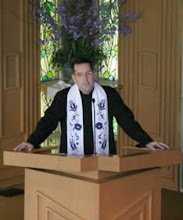
About three weeks ago, in New York, a Muslim man, Imam Shamsi Ali, gave a talk at the Free Synagogue in Queens about the "Essence of Islam" during an interfaith Holocaust remembrance service. After the talk, he engaged in a dialogue with Rabbi Michael Weisser, who said "Imam Ali and I share a common vision of a world in which people of all traditions will come to consider themselves as family working together to build a more harmonious world."
Which one of these stories do we want to tell our kids?
The story of how several repeat-offenders, (one of whom made statements on Islam that "often had to be corrected" according to an assistant Imam), took a twisted version of Islam and aspired to commit violent acts in its name?
Or the story of how Jewish and Muslim communities are coming together to learn from one another and ensure that one of the most horrific acts of the 20th century should never be repeated?
Or better yet - how can we transform the first story into the second story?
This is one job of an interfaith leader.
The way that communities react to events like the one that happened Wednesday night can change the story. Nihad Awad, national executive director of the Council on American-Islamic Relations (CAIR), immediately came out with the following statement: "We repeat the American Muslim community's repudiation of bias-motivated crimes and of anyone who would falsely claim religious justification for violent actions."
Mayor Bloomberg said "Most people in New York City want to live together, work together, and I think we're as safe today as we've ever been before."
The first important steps have been taken: national and community leaders are speaking out against this act, refuting the religious claims of the would-be attackers and reassuring the community that the majority of people want nothing more than to live and work together in peace.
Now the next steps must be taken. Interfaith leaders must step up and work to ensure that relationships between the Jewish and Muslim communities, bonds we know exist from other events such as the Holocaust remembrance service, are maintained. They should create forums for discussion on how to keep their community safe, and talk about how to process events like these. They must host dialogues to better understand one another and the shared values among their different faith traditions, then organize service events to act on these values and better their common community.
One way to start this process is to take direct public action. In Chicago after September 11, a mosque received threats of violence against anyone entering the building. This mosque had existed for years in the community, and the Muslims who prayed there had built relationships with their Jewish and Christian neighbors. Because these communities realized that an attack on any one group is an attack on everyone, they stood vigil around the mosque during afternoon prayers to ensure that the Muslim community could pray in peace.
No matter what activities community leaders in the Bronx may choose, they should work towards one end - the end that can transform the 21st century into an era of interfaith cooperation instead of the era of global terror.
They must build bridges.
posted by Roger Butts @ 10:35 PM
5 Comments


5 Comments:
Hi !.
You may , perhaps curious to know how one can collect a huge starting capital .
There is no initial capital needed You may begin to receive yields with as small sum of money as 20-100 dollars.
AimTrust is what you thought of all the time
The company represents an offshore structure with advanced asset management technologies in production and delivery of pipes for oil and gas.
Its head office is in Panama with affiliates everywhere: In USA, Canada, Cyprus.
Do you want to become an affluent person?
That`s your choice That`s what you really need!
I feel good, I started to take up income with the help of this company,
and I invite you to do the same. It`s all about how to select a correct partner who uses your funds in a right way - that`s the AimTrust!.
I take now up to 2G every day, and what I started with was a funny sum of 500 bucks!
It`s easy to get involved , just click this link http://wyzixumemi.uvoweb.net/jycaqy.html
and lucky you`re! Let`s take our chance together to feel the smell of real money
Good day !.
might , probably very interested to know how one can make real money .
There is no initial capital needed You may start to get income with as small sum of money as 20-100 dollars.
AimTrust is what you thought of all the time
The company represents an offshore structure with advanced asset management technologies in production and delivery of pipes for oil and gas.
It is based in Panama with offices everywhere: In USA, Canada, Cyprus.
Do you want to become a happy investor?
That`s your chance That`s what you wish in the long run!
I feel good, I began to take up real money with the help of this company,
and I invite you to do the same. If it gets down to choose a proper partner utilizes your funds in a right way - that`s AimTrust!.
I make 2G daily, and my first investment was 500 dollars only!
It`s easy to start , just click this link http://ekamosepi.envy.nu/vaqazeg.html
and lucky you`re! Let`s take this option together to get rid of nastiness of the life
Hi there!
I would like to burn a theme at this forum. There is such a thing, called HYIP, or High Yield Investment Program. It reminds of ponzy-like structure, but in rare cases one may happen to meet a company that really pays up to 2% daily not on invested money, but from real profits.
For quite a long time, I make money with the help of these programs.
I'm with no money problems now, but there are heights that must be conquered . I get now up to 2G a day , and I started with funny 500 bucks.
Right now, I'm very close at catching at last a guaranteed variant to make a sharp rise . Turn to my web site to get additional info.
[url=http://theinvestblog.com] Online investment blog[/url]
Hello!
You may probably be very curious to know how one can manage to receive high yields on investments.
There is no initial capital needed.
You may begin to get income with a sum that usually goes
on daily food, that's 20-100 dollars.
I have been participating in one project for several years,
and I'm ready to share my secrets at my blog.
Please visit my pages and send me private message to get the info.
P.S. I earn 1000-2000 per daily now.
http://theinvestblog.com [url=http://theinvestblog.com]Online Investment Blog[/url]
Hi everybody!
Sure, you’ve heard about me, because my fame is running in front of me,
my name is James F. Collins.
Generally I’m a venturesome gambler. for a long time I’m keen on online-casino and poker.
Not long time ago I started my own blog, where I describe my virtual adventures.
Probably, it will be interesting for you to find out my particular opinion on famous gambling projects.
Please visit my diary. http://allbestcasino.com I’ll be interested on your opinion..
Post a Comment
Subscribe to Post Comments [Atom]
<< Home